Supernode hardware census: the blob ceiling is 21, mainnet fills 6


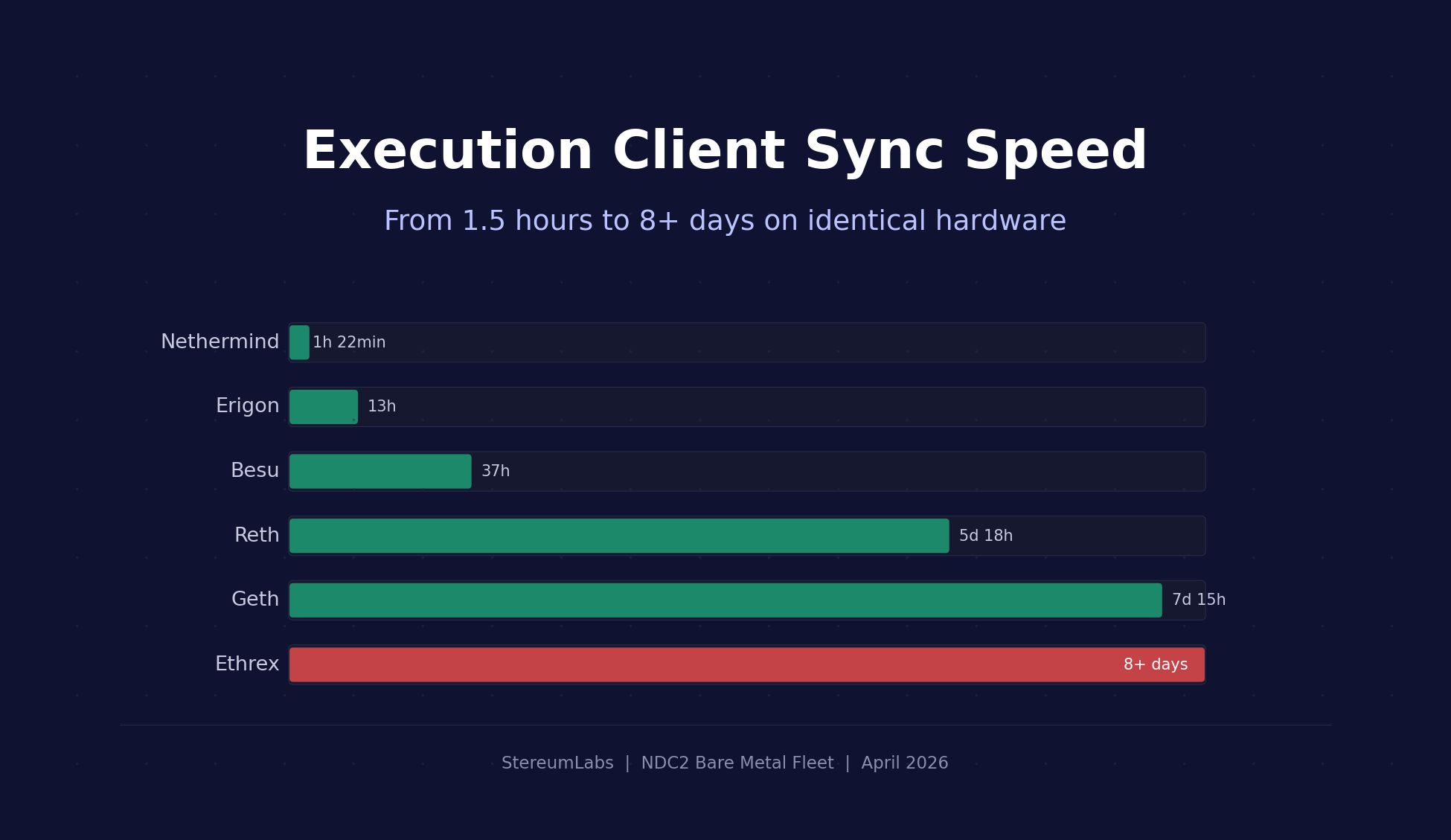
When BPO2, the second Blob Parameter Only fork, raised Ethereum's blob ceiling to a target of 14 blobs per block and a maximum of 21, it roughly doubled the room a block has for rollup data. Fusaka had already changed how that data moves, because under PeerDAS each blob is erasure-coded and split into 128 data columns, and a node either samples a handful of them or, if it runs as a supernode, keeps all 128. We run 84 supernodes at full custody, which is the worst case for blob load, and eight months into the new ceiling the result is almost boring. Mainnet fills only about 6 blobs per block, the blob-specific cost on our fleet is small, and the hardware differences we can actually measure come down to the client you run rather than the blobs it carries.
That is a duller headline than "blobs are crushing node operators," but it is the one the data supports. The averages are calm, and the interesting question is where the calm comes from and where it ends.